The Future of Biosolids: from land bank to new ground
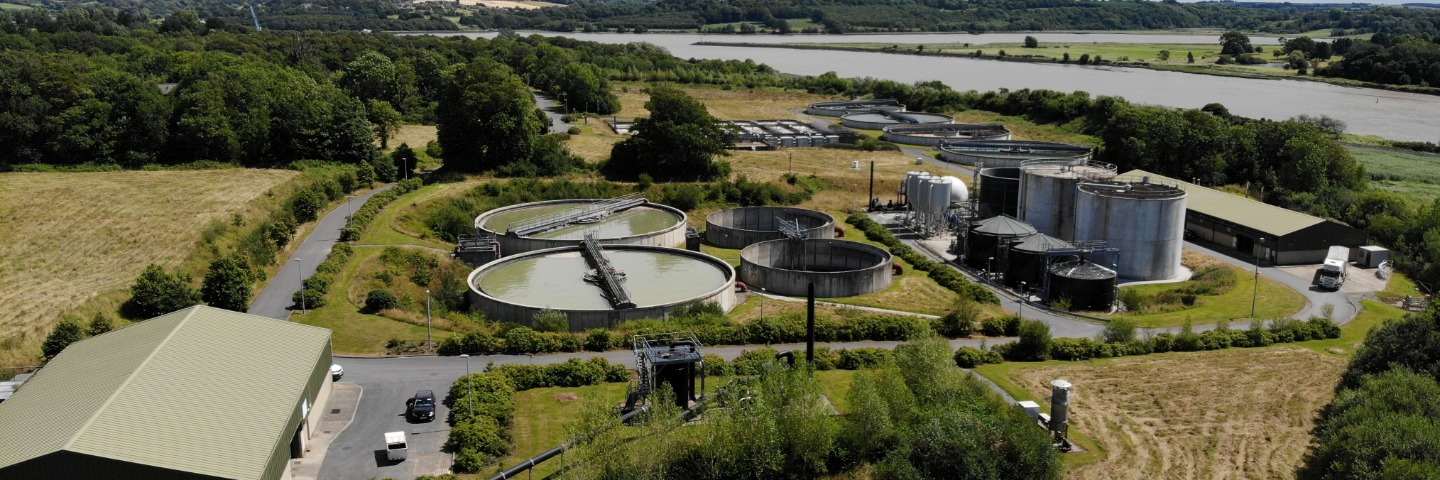
For many years, biosolids occupied a quiet, practical place in the circular economy. Wastewater sludge, once treated and stabilised, could return to agricultural land as organic matter and nutrients. But that circle is tightening. Across Europe, biosolids are being reshaped by regulation, public confidence, nutrient security, emerging contaminants, climate obligations and the biggest challenge of all, land availability.
Ireland is entering that same moment. Uisce Éireann's Draft National Bioresources Strategy marks a shift in language and ambition. Wastewater sludge management is being recast as bioresources management: a move from disposal to recovery, from outlet management to resource strategy. The draft strategy acknowledges that treated bioresources are currently reused in agriculture, while recognising that reliance on a single outlet leaves the system exposed to policy, regulatory and compliance change. It identifies population growth, higher treatment standards, storage, transport, emerging contaminants, and data/reporting requirements as key pressures.
Agricultural reuse remains valuable and should not be dismissed. It returns phosphorus and organic matter to the soil and can reduce dependence on mineral fertilisers. But its future cannot be assumed. The recast Urban Wastewater Treatment Directive brings new expectations around enhanced monitoring, energy neutrality and circular economy performance. Uisce Éireann's strategy also anticipates revisions to the Sewage Sludge Directive and the Code of Good Practice for the Use of Biosolids in Agriculture, alongside wider circular economy legislation. In that context, the landbank is no longer just a physical question of hectares; it is a regulatory, environmental and social licence question.
The Irish figures highlight this. Uisce Éireann treats approximately 70,000 tonnes of dry solids per year before beneficial reuse in agriculture. It also manages more than 1,000 wastewater treatment plants, including many small rural works. Transport therefore becomes part of the environmental story: carbon, odour, traffic, cost and operational resilience sit beside treatment and spreading.
The draft strategy's response is a more resilient system: regional Bioresource Centres, Satellite Dewatering Centres, a Bioresource Decision Support Tool, enhanced monitoring, a Biosolids Assurance Scheme, a Bioresources Response Plan, and research and innovation. It also points towards biogas, biomethane, phosphorus, ammonia, biochar, hydrochar and activated carbon. This is the right direction. The question is how quickly Ireland can move from recognition to delivery.
This is where Advanced Thermal Conversion (ATC) becomes important. ATC is not a single technology but a family of processes that use heat, pressure, oxidation or oxygen-starved conditions to convert sludge into more stable and potentially valuable outputs. Pyrolysis, Gasification, Hydrothermal Carbonisation, Hydrothermal Liquefaction and Hydrothermal Oxidation (HTO) each sit at different points on this spectrum. The Draft Bioresources Strategy identifies ATC as an area for review, trial and possible future deployment, particularly as a way to diversify beyond land application while recovering energy and nutrients.
The UK is already moving into demonstration. Ofwat's Innovation Fund has supported sewage sludge gasification, pyrolysis and hydrothermal oxidation projects across the UK water sector. These projects seek to prove whether sludge can become gas, biochar, ash-derived products or mineral outputs while addressing microplastics and PFAS. For Ireland, it is the author’s opinion that the most promising emerging solutions are pyrolysis and HTO. These are compared below.
.png)
Pyrolysis is a non-oxidative process: sludge is dried and heated in the absence of oxygen, producing biochar, syngas and sometimes bio-oil. Its attractions are clear. It can substantially reduce volume, stabilise carbon, concentrate phosphorus in a solid product and potentially destroy or immobilise contaminants. Uisce Éireann's research visit to the Farevejle municipal wastewater treatment plant in Denmark noted an integrated drying and pyrolysis process operating at 650 degrees C, with a design capacity of 1,000 tonnes dry solids per year and approximately 400 tonnes per year of biochar produced. The reported biochar contained 5-6% total phosphorus and 2-3% total nitrogen, while testing indicated very low or non-detectable levels for a range of contaminants in relevant outputs.
Yet pyrolysis has a constraint: it likes dry feedstock. Energy must be spent removing water before conversion. For dewatered sludge this may be manageable, especially with waste heat or integrated drying. But wetter sludge makes the business case depend on heat integration, scale and product value.
HTO approaches the problem differently. It is an oxidative process in water, operating under elevated temperature and pressure, designed for wet organic streams. That is its quiet advantage. Instead of fighting the water in sludge, it uses water as the reaction medium. For municipal sludge systems, this is potentially beneficial. A technology that can accept wetter feedstock may reduce the need for energy-intensive drying and may sit more naturally beside existing wastewater treatment hydraulics.
This does not mean HTO should simply replace pyrolysis. Pyrolysis may be well suited where the strategic objective is biochar production, carbon sequestration, phosphorus concentration and integration with available heat. HTO may be better where the challenge is wet sludge, contaminant destruction, volume reduction and the creation of a mineral output less dependent on agricultural land. The intelligent future is not a single technology bet. It is a structured trial programme that tests feedstocks, energy balances, emissions, PFAS fate, nutrient recovery, residues, planning requirements, whole-life cost and market outlets under Irish conditions.
That is the next step Ireland now needs. Uisce Eireann's Draft Bioresources Strategy has opened the door. It recognises the vulnerability of a single agricultural outlet, the pressure of emerging contaminants, the need for enhanced monitoring, and the opportunity to recover value from what was once treated as residual waste. The policy language has become clearer. The practical task is now to establish municipal-scale trials of pyrolysis, HTO and other ATC technologies, linked to real bioresource centres and real Irish sludge characteristics.
The future of biosolids will be decided by evidence: tonnes treated, kilowatt-hours recovered, kilograms of phosphorus retained, contaminants destroyed, truck movements avoided, carbon reduced and public confidence earned. Land application may remain part of the answer, but no longer the whole answer. Ireland's biosolids strategy must now move from the field alone to a wider resource economy, in which wastewater sludge is not merely managed, but transformed.
References:
- Uisce Eireann, Draft National Bioresources Strategy, May 2026.
- RPS / Egis, Draft National Bioresources Strategy: SEA Environmental Report, May 2026.
- RPS / Egis, Draft National Bioresources Strategy: SEA Environmental Report Non-Technical Summary, May 2026.
- RPS / Egis, Draft National Bioresources Strategy: Pre-Consultation Natura Impact Statement, May 2026.
- Ofwat Innovation Fund, Water Breakthrough Challenge: Transforming treated sludge into green electricity / sewage sludge gasification.
- Yorkshire Water, Advanced Thermal Conversion gasification project, 2024.